

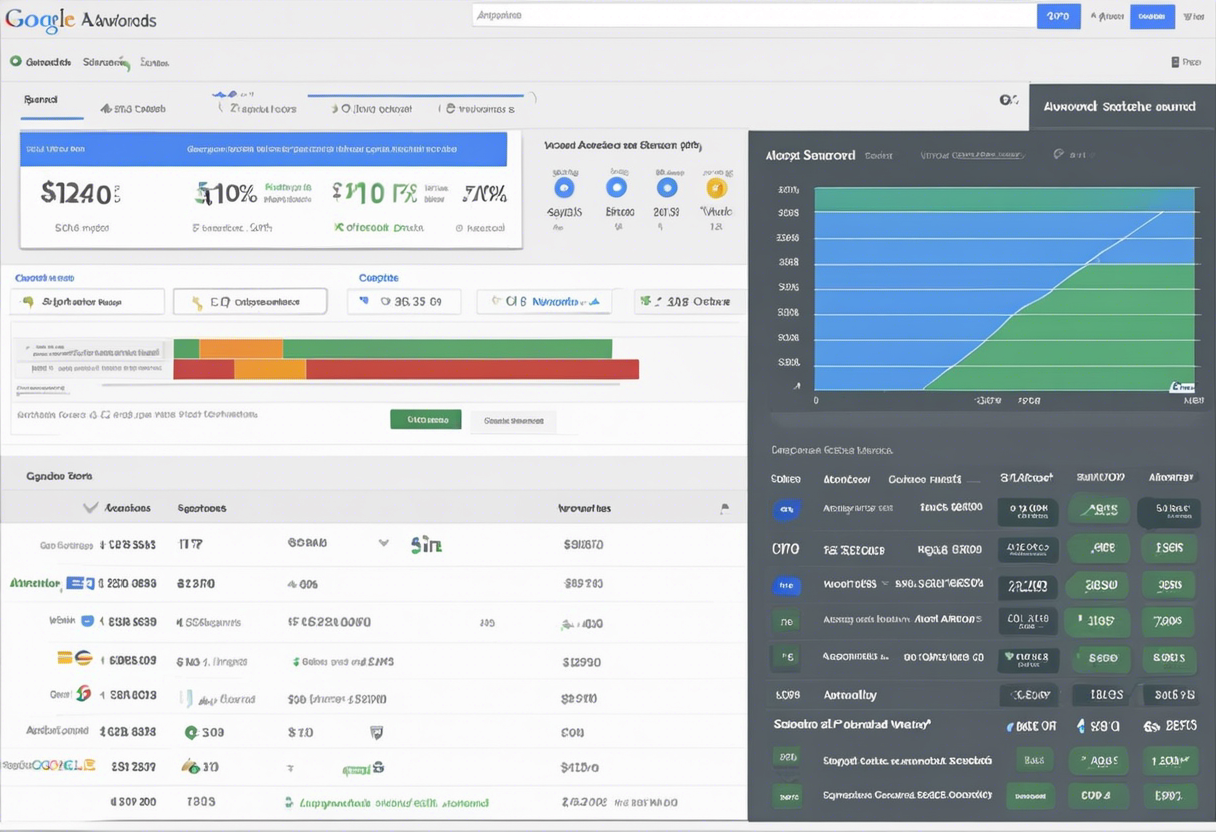
Here's an overview:
- Introduction to Google AdWords Keyword Tool
- How Google AdWords Keyword Tool Works
- Factors Influencing the Cost of Keywords
- Understanding Keyword Competition
- The Role of Quality Score in Keyword Cost
- Budgeting and Cost Management in Google AdWords
- Optimizing Keyword Costs
- Monitoring and Adjusting Keyword Costs
- Tips for Maximizing ROI with Google AdWords
- Conclusion and Final Thoughts
Introduction to Google AdWords Keyword Tool
The Google AdWords Keyword Tool is a powerful tool that allows advertisers to research and find the most relevant and effective keywords to use in their advertising campaigns. It provides valuable insights into keyword popularity, competition, and suggested bid amounts, helping advertisers make informed decisions about their keyword strategies.
The tool offers a range of features and functionality that allow users to refine and customize their keyword research. By entering a specific keyword or keyword phrase, advertisers can access a wealth of data relating to search volume, competition level, and cost-per-click (CPC) estimates. This information is crucial for advertisers looking to optimize their ad campaigns and achieve the highest possible return on investment (ROI).
One of the key advantages of the Google AdWords Keyword Tool is its ability to provide keyword suggestions and variations based on the initial keyword entered. This feature helps advertisers identify alternative keywords that may be relevant to their products or services. For example, if a user enters the keyword "running shoes," the tool may suggest related keywords such as "athletic footwear" or "jogging sneakers." This feature can be particularly useful for advertisers looking to expand their keyword lists and target a broader audience.
Another important feature of the Google AdWords Keyword Tool is its insight into keyword competition. The tool provides a competitiveness score, indicating how many advertisers are bidding on a particular keyword. This information helps advertisers gauge the level of competition they will face when targeting specific keywords and adjust their bidding and targeting strategies accordingly. It can also help advertisers identify niche keywords with lower competition, offering opportunities for cost-effective advertising.
Additionally, the Google AdWords Keyword Tool offers estimated bid amounts for each keyword, known as the cost-per-click (CPC). This data provides advertisers with an understanding of how much they may need to bid to achieve a desired ad position. By considering both the competitiveness score and the CPC estimates, advertisers can prioritize keywords that are both relevant and commercially viable.
In conclusion, the Google AdWords Keyword Tool is an essential resource for advertisers looking to maximize the effectiveness of their paid search campaigns. By providing insights into keyword popularity, competition, and cost, the tool helps advertisers make informed decisions about their keyword strategies. Whether identifying new keywords, assessing competition, or estimating bid amounts, the Google AdWords Keyword Tool offers valuable data that can drive success in online advertising.
How Google AdWords Keyword Tool Works
Google AdWords Keyword Tool is an essential tool for businesses and advertisers looking to optimize their online marketing efforts. This tool allows users to identify and target specific keywords that are relevant to their industry or niche. By understanding how the Google AdWords Keyword Tool works, users can make informed decisions about their advertising campaigns and improve their chances of reaching their target audience.
- Keyword Search
The first step in using the Google AdWords Keyword Tool is to conduct a keyword search. Users input a word or phrase related to their business, product, or service, and the tool generates a list of keywords that are relevant to the search term. This list includes variations, synonyms, and related terms that can help users expand their keyword targeting options.
- Keyword Suggestions
Along with the generated list of keywords, the Google AdWords Keyword Tool also provides users with keyword suggestions. These suggestions are based on actual search data and can help users discover new keywords that they may not have originally considered. This feature is particularly useful for businesses looking to broaden their keyword targeting strategy and reach a wider audience.
- Keyword Metrics
The Google AdWords Keyword Tool provides valuable metrics that can help users determine the potential value of a particular keyword. These metrics include search volume, competition level, and suggested bid. Search volume indicates how often a keyword is searched for, competition level shows how competitive the keyword is, and suggested bid provides an estimate of the cost per click for that keyword. By analyzing these metrics, users can gauge the popularity and competitiveness of keywords and make informed decisions about which ones to target.
- Refining Keywords
Once users have generated a list of relevant keywords, they can further refine their selection by using the Google AdWords Keyword Tool's filtering options. Users can filter by search volume, competition level, and other metrics to identify high-value keywords that align with their advertising goals. This helps ensure that their advertising budget is allocated effectively and that they are targeting keywords that have the potential to generate the desired results.
- Keyword Analysis
In addition to providing keyword suggestions and metrics, the Google AdWords Keyword Tool also allows users to analyze the performance of their chosen keywords. Users can track the historical search volume, competition trends, and other data to assess the viability of their selected keywords over time. This analysis helps users stay informed about the effectiveness of their keyword targeting and make necessary adjustments to their advertising strategy.
Overall, the Google AdWords Keyword Tool is a powerful tool that enables businesses and advertisers to effectively target keywords and optimize their online advertising campaigns. By understanding how this tool works and leveraging its features, users can increase their chances of reaching their target audience, improving their ROI, and achieving their marketing objectives.
Factors Influencing the Cost of Keywords
When it comes to using the Google AdWords Keyword Tool, there are several factors that can influence the cost of keywords. Understanding these factors can help advertisers make informed decisions and optimize their ad campaigns. Here are some key factors that impact keyword costs:
Keyword Competition: The level of competition for a particular keyword plays a significant role in determining its cost. Popular keywords with high search volumes and strong advertiser competition tend to have higher costs. This is because advertisers bid against each other in an auction-style system, and the more competitive the keyword, the higher the bids.
Keyword Relevance: The relevance of a keyword to the ad and landing page is crucial. Google's algorithm rewards relevant ads by giving them higher Quality Scores. Higher Quality Scores can result in lower costs per click, as Google believes these ads provide more value to users. Advertisers should focus on using highly relevant keywords to improve their Quality Scores and reduce costs.
Geographic Targeting: Advertisers can choose to target their ads to specific geographic locations. The cost of keywords can vary depending on the location. Keywords targeting highly competitive and affluent areas may be more expensive compared to less competitive or rural areas. Advertisers should consider their target audience's location and competition levels when selecting keywords.
Ad Position: The position of an ad on the search engine results page (SERP) can impact its cost. Ads that appear at the top of the page typically have higher costs compared to ads in lower positions. Advertisers should consider their budget and goals when deciding on the desired ad position. Higher positions may generate more visibility and clicks but can also increase costs.
Time of Day and Day of Week: Advertisers can take advantage of the scheduling feature to display their ads at specific times and on specific days. The cost of keywords can vary depending on the day of the week and time of day. Advertisers may find that certain times or days yield better results at a lower cost. It is essential to monitor and analyze ad performance to optimize scheduling for maximum effectiveness.
Ad Quality and Historical Performance: Google rates the quality and relevance of ads based on various factors, such as click-through rates (CTR), ad relevance, and landing page experience. Ads with higher quality and historical performance tend to have better ad positions and lower costs. Advertisers should continuously optimize their ads and landing pages to improve quality and lower keyword costs.
Bidding Strategy: Advertisers have control over their bidding strategy. Different bidding strategies, such as manual bidding or automated bidding, can influence keyword costs. Advertisers should experiment with different bidding strategies and closely monitor their performance to find the most effective approach for their campaign goals.
By considering these factors, advertisers can better understand the cost of keywords in the Google AdWords Keyword Tool and make informed decisions to optimize their ad campaigns. It is crucial to regularly monitor and analyze campaign performance and adjust strategies as needed to achieve desired results efficiently.
Understanding Keyword Competition
When using the Google AdWords Keyword Tool, it is crucial to understand the concept of keyword competition. Keyword competition refers to how challenging it is to rank for a particular keyword in search engine results pages (SERPs). By understanding keyword competition, advertisers can make informed decisions about which keywords to target and how much they should bid for them.
Factors Affecting Keyword Competition
Several factors contribute to keyword competition:
Search Volume: Keywords with higher search volumes typically have more competition. This is because advertisers are vying for the attention of a larger audience. Conversely, keywords with lower search volumes often have less competition.
Relevance: The relevance of a keyword to a particular business or industry also affects competition. If a keyword is highly relevant to many businesses, it is likely to have more competition. On the other hand, if a keyword is specific to a niche or has limited relevance, it may have lower competition.
Advertiser Demand: The number of advertisers competing for a specific keyword affects competition. If many advertisers are bidding on a keyword, it indicates that there is high demand, leading to increased competition.
Ad Rank: Ad Rank is a factor that Google considers when determining the position of an ad on the SERPs. Ad Rank is calculated based on the bid amount, the quality of the ad, and the expected impact of ad extensions. High Ad Rank results in better ad positions, but also increases competition for the keyword.
Evaluating Keyword Competition
When evaluating keyword competition, there are a few metrics to consider:
Competition Score: The Google AdWords Keyword Tool provides a competition score for each keyword, ranging from low to high. This score indicates the level of competition for a particular keyword. Lower competition scores suggest less competition, while higher scores denote fierce competition.
Top of Page Bid Range: Advertisers can also view the top of page bid range for a keyword. This range provides an estimate of how much other advertisers are paying for the top ad positions. Higher bid ranges suggest more competition for that keyword.
Strategic Considerations
Understanding keyword competition is essential for advertisers to strategize their AdWords campaigns effectively. Here are some strategic considerations:
Balance Competition and Traffic: High competition keywords may drive significant traffic, but they often come with higher costs. It is crucial to strike a balance between competitive keywords and less competitive ones to optimize the budget and maximize ROI.
Long-tail Keywords: Exploring long-tail keywords is often a wise strategy. While they may have lower search volumes, they generally have less competition. Targeting long-tail keywords can help businesses reach a more specific audience and potentially achieve higher conversion rates.
Optimize Quality Score: Advertisers can improve their Ad Rank and reduce competition by optimizing their ads and landing pages to achieve higher Quality Score. Higher Quality Score can result in better ad positions and lower costs per click.
By understanding keyword competition and incorporating strategic considerations, advertisers can make more informed decisions when using the Google AdWords Keyword Tool. This knowledge can lead to more effective and efficient ad campaigns, resulting in better outcomes for businesses.
The Role of Quality Score in Keyword Cost
The cost of keywords in Google AdWords is not solely determined by bidding on specific keywords. Another important factor that affects keyword cost is the quality score. Quality score is a metric used by Google to evaluate the relevance and quality of an ad campaign and its corresponding landing page.
What is Quality Score?
Quality score is a numerical value assigned to each keyword in your AdWords account. It ranges from 1 to 10, with 1 being the lowest and 10 being the highest score. The quality score is determined by several factors, including the click-through rate (CTR) of the keyword, the relevance of the keyword to the ad copy, the quality of the landing page, and the historical performance of the keyword.
How Does Quality Score Impact Keyword Cost?
The quality score directly influences the cost per click (CPC) of a keyword. Higher quality scores lead to lower CPCs, while lower quality scores result in higher CPCs. This is because Google rewards advertisers who provide relevant, high-quality content to users.
When calculating the ad rank (the position of an ad on the search engine results page), Google multiplies the maximum bid by the quality score. So, a higher quality score can improve the ad rank without requiring a higher bid, resulting in cost savings for advertisers.
Benefits of a High Quality Score
Having a high quality score offers several advantages:
Lower Cost: As mentioned earlier, a higher quality score leads to lower CPCs. This helps advertisers save money while still maintaining a successful ad campaign.
Better Ad Position: A higher quality score improves the ad rank, allowing ads to appear in more prominent positions on the search engine results page. This can lead to increased visibility and higher click-through rates.
Higher Ad Click-Through Rates: Advertisements with a higher quality score tend to be more relevant to user searches. This can increase the likelihood of users clicking on the ad, resulting in more conversions.
Improved Ad Performance: By focusing on improving quality score, advertisers are encouraged to create better-targeted ads and landing pages. This can lead to improved ad performance and overall campaign success.
Strategies for Improving Quality Score
To improve quality score and decrease keyword cost, advertisers can follow these strategies:
- Ensuring keyword relevance to ad copy and landing pages
- Conducting keyword research to identify highly relevant keywords
- Optimizing ad copy to increase CTRs
- Improving landing page experience and relevance
- Monitoring and adjusting bid amounts and campaign performance
By implementing these strategies, advertisers can enhance their quality scores and decrease keyword costs, ultimately improving the effectiveness of their Google AdWords campaigns.
Budgeting and Cost Management in Google AdWords
When using the Google AdWords Keyword Tool, it is essential to have a clear understanding of budgeting and cost management. These aspects play a crucial role in ensuring that your advertising campaign stays within your desired budget and maximizes your return on investment (ROI). Here are some key considerations when it comes to budgeting and cost management in Google AdWords.
Set a realistic budget: Before you begin using the Google AdWords Keyword Tool, it is essential to determine your budget for advertising. Consider your overall marketing goals, the size of your business, and how much you are willing to invest in online advertising. Setting a realistic budget will help you allocate your funds effectively and avoid overspending.
Keyword bidding: When using the Keyword Tool, you will need to bid on keywords to secure ad placements. However, keep in mind that popular keywords often come with higher costs per click (CPC). It is important to find a balance between bidding on high-performing keywords and managing your budget. Consider using a mix of high- and low-cost keywords to ensure a well-rounded campaign.
Monitor your campaign performance: Regularly monitor your Google AdWords campaign to assess its performance. Keep track of important metrics such as click-through rates (CTR), conversion rates, and cost per conversion. This data will help you optimize your campaign and make necessary adjustments to improve its efficiency. By continuously monitoring your campaign, you can ensure that your budget is being put to good use.
Ad scheduling: Another cost management technique in Google AdWords is ad scheduling. By analyzing the data on when your ads perform best, you can schedule your ads to appear selectively during those times. This ensures that your budget is focused on the periods when your target audience is most likely to engage with your ads. Ad scheduling helps prevent wasteful spending during off-peak times.
Geographic targeting: Google AdWords allows you to target specific locations with your ads. This feature is helpful if your business caters to a specific geographic area. By targeting the right locations, you can ensure that your budget is used efficiently and that your ads reach the intended audience.
Test and optimize: Continuously testing and optimizing your Google AdWords campaign is crucial for effective budget management. Experiment with different ad formats, keyword combinations, and targeting options to understand what works best for your business. By analyzing the data and making informed decisions, you can optimize your campaign and improve its performance while keeping costs under control.
In conclusion, budgeting and cost management are essential elements of running a successful Google AdWords campaign. By setting a realistic budget, bidding on keywords strategically, monitoring campaign performance, utilizing ad scheduling and geographic targeting, and regularly testing and optimizing your campaign, you can ensure that your advertising budget is effectively utilized to achieve your marketing objectives.
Optimizing Keyword Costs
When it comes to Google AdWords, optimizing keyword costs is a crucial aspect of your advertising strategy. By taking the time to understand how the cost of keywords is calculated and implementing effective cost optimization techniques, you can maximize your return on investment and achieve better results with your ad campaigns.
Here are some key strategies to consider when optimizing keyword costs:
Keyword Research: Conduct thorough keyword research to identify the most relevant and high-performing keywords for your business. This will help you target the right audience and increase the chances of attracting qualified leads. Use the Google AdWords Keyword Planner or other keyword research tools to gather data on search volume, competition, and estimated costs of keywords.
Focus on Quality Score: Google assigns a Quality Score to each keyword, which affects its cost and ad rank. Aim to improve the quality score of your keywords by optimizing ad relevance, landing page experience, and click-through rates. Higher quality scores can result in lower keyword costs and better ad visibility.
Negative Keywords: Regularly review and refine your negative keyword list to exclude irrelevant searches. Negative keywords are terms or phrases that you want to avoid triggering your ads. By excluding irrelevant searches, you can reduce wasted ad spend and focus your budget on the most targeted and profitable keywords.
Ongoing Monitoring and Optimization: It's important to regularly monitor the performance of your keywords and make necessary adjustments. Keep an eye on metrics such as click-through rates, conversion rates, and cost per conversion. By analyzing this data, you can identify underperforming keywords and reallocate your budget towards more successful ones.
Ad Position: Consider the ad position when optimizing keyword costs. While aiming for the top position may seem appealing, it often comes with higher costs. By experimenting with different ad positions, you can find a balance between visibility and cost-effectiveness. Keep in mind that ad position can also impact click-through rates and conversion rates.
Landing Page Optimization: Ensure that your landing pages are optimized for user experience and conversions. A well-designed and relevant landing page can improve the quality score of your keywords and increase the chances of converting visitors into customers. Test different elements such as headlines, call-to-action buttons, and page layout to optimize your landing page performance.
By implementing these strategies and continually refining your keyword costs, you can drive more targeted traffic to your website, increase conversions, and achieve a higher return on investment with your Google AdWords campaigns.
Monitoring and Adjusting Keyword Costs
Once you have set up your Google AdWords campaign and chosen your target keywords, it is important to continuously monitor and adjust the costs associated with those keywords. This ensures that you are optimizing your budget and getting the most value from your advertising investment. Here are some key steps to effectively monitor and adjust keyword costs:
Regularly review keyword performance: Regularly monitor the performance of your keywords to understand which ones are driving the most traffic and conversions. Use the Google AdWords Keyword Tool to analyze the performance metrics such as click-through rates (CTR), conversion rates, and cost per click (CPC). Identify the keywords that are performing well and those that may need adjustments.
Identify high-cost keywords: Pay attention to keywords that have a high cost per click (CPC). These keywords can quickly eat up your budget if they are not generating enough conversions or Return on Investment (ROI). Identify any keywords that have a high CPC but are not producing the desired results. Adjust or remove these keywords from your campaign to optimize your budget.
Refine keyword match types: Google AdWords offers different keyword match types, including exact match, phrase match, and broad match. By understanding the differences between these match types, you can better control your keyword costs. For example, using exact match keywords may result in higher CPCs but could also generate more targeted traffic. Experiment with different match types to find the balance between cost and conversion rates.
Implement negative keywords: Negative keywords are terms that you don't want your ads to appear for. By regularly reviewing your search term reports and identifying irrelevant or low-converting search queries, you can add these as negative keywords. This helps to reduce costs associated with unnecessary clicks and ensures that your ads are only shown to relevant audiences.
Optimize ad relevancy and quality score: Ad relevancy and quality score play a crucial role in determining the cost of your keywords. Improve your ad relevancy by aligning your ad copy with the target keywords and landing page content. A higher quality score can lower your CPC and improve your ad ranking. Regularly review and optimize your ad copy and landing pages to maximize ad relevancy and quality score.
Monitor bid adjustments: Bid adjustments allow you to increase or decrease your bids based on various factors such as device type, location, and time of day. Continuously monitor the performance of your bids and make adjustments as needed. For instance, if you notice that mobile traffic is not converting as well as desktop traffic, you can decrease your bids for mobile devices to optimize your budget.
Test and optimize: Testing is an essential part of optimizing your keyword costs. Continuously test different ad copy, landing page variations, and bidding strategies to identify what works best for your campaign. Use A/B testing to compare different elements and make data-driven decisions on how to optimize your keyword costs.
By monitoring and adjusting keyword costs in your Google AdWords campaign, you can ensure that you are maximizing your advertising budget and achieving the best possible results. Regular analysis, refinement, and testing will allow you to fine-tune your campaigns and drive better ROI. Stay proactive and agile in managing your keywords to stay ahead of the competition and reach your advertising goals.
Tips for Maximizing ROI with Google AdWords
To make the most of your investment in Google AdWords, there are several tips and strategies you can employ. By optimizing your campaigns and keywords, you can increase your return on investment (ROI) and maximize the effectiveness of your advertising efforts. Here are a few tips to help you get started:
Focus on Relevant and Specific Keywords: Instead of targeting broad keywords, focus on specific long-tail keywords that are relevant to your products or services. This will help you attract more qualified leads and increase the chances of conversion.
Use Negative Keywords: Negative keywords are the ones you don't want your ads to appear for. By carefully selecting negative keywords, you can avoid wasting money on irrelevant clicks and ensure that your ads only appear to highly-targeted audiences.
Improve Quality Score: Google assigns a quality score to each keyword based on various factors such as click-through rate (CTR), landing page experience, and ad relevance. By continuously improving your quality score, you can lower your cost per click (CPC) and achieve a higher ad position.
Optimize Ad Text and Extensions: Write compelling ad copy that includes relevant keywords and a clear call-to-action. Additionally, take advantage of ad extensions like sitelinks, callouts, and call extensions to provide additional information and increase your ad's visibility.
Experiment with Ad Formats: Explore different ad formats such as responsive search ads, image ads, and video ads to see which ones perform best for your business. Test different variations and analyze the results to identify the most effective formats.
Leverage Remarketing: Implement remarketing campaigns to target users who have previously interacted with your website or ads. This can help increase conversion rates by reaching out to users who have already shown interest in your products or services.
Monitor and Adjust: Regularly monitor your ad campaigns, analyze the performance data, and make necessary adjustments. This includes adjusting bids, pausing underperforming keywords or ads, and optimizing landing pages to improve conversion rates.
Track Conversions: Install conversion tracking codes on your website to measure the success of your campaigns. This will allow you to accurately determine the ROI of your AdWords investment and make informed decisions regarding budget allocation.
By implementing these tips and strategies, you can effectively maximize your ROI with Google AdWords. Remember to continuously analyze and refine your campaigns to ensure they remain aligned with your business goals and objectives.
Conclusion and Final Thoughts
In conclusion, the Google AdWords Keyword Tool is a valuable resource for businesses and advertisers looking to optimize their online advertising campaigns. It provides a range of features and metrics that can help determine the most relevant and effective keywords to target.
One of the key benefits of using the Google AdWords Keyword Tool is its cost-effectiveness. The tool is available for free, allowing businesses of all sizes to access valuable keyword data without any financial investment. However, it is important to note that while the tool itself is free, the cost of running AdWords campaigns can vary depending on various factors, such as keyword competitiveness and bidding strategies.
The Google AdWords Keyword Tool also offers a comprehensive set of data and insights to help businesses make informed decisions. It provides information on search volume, competition level, and suggested bid amounts for each keyword, giving advertisers a deeper understanding of the market and their target audience.
Moreover, the tool allows for extensive keyword research and analysis, enabling businesses to identify new opportunities and tailor their campaigns accordingly. By exploring different keyword variations and long-tail keywords, advertisers can refine their targeting and increase the relevancy of their ads, leading to better click-through rates and higher conversion rates.
However, it's worth mentioning that the Google AdWords Keyword Tool is just one part of the equation when it comes to successful online advertising. It is important to combine keyword research with other strategies, such as creating compelling ad copy, optimizing landing pages, and continuously monitoring and optimizing campaigns to maximize results.
In conclusion, the Google AdWords Keyword Tool is a valuable tool for businesses and advertisers looking to improve their online advertising campaigns. It provides valuable insights and data to help target the right keywords and optimize ad campaigns effectively. Although the tool itself is free to use, it is crucial to carefully plan and manage the overall advertising budget to get the best return on investment.
-min.png)